Blog - Orvador

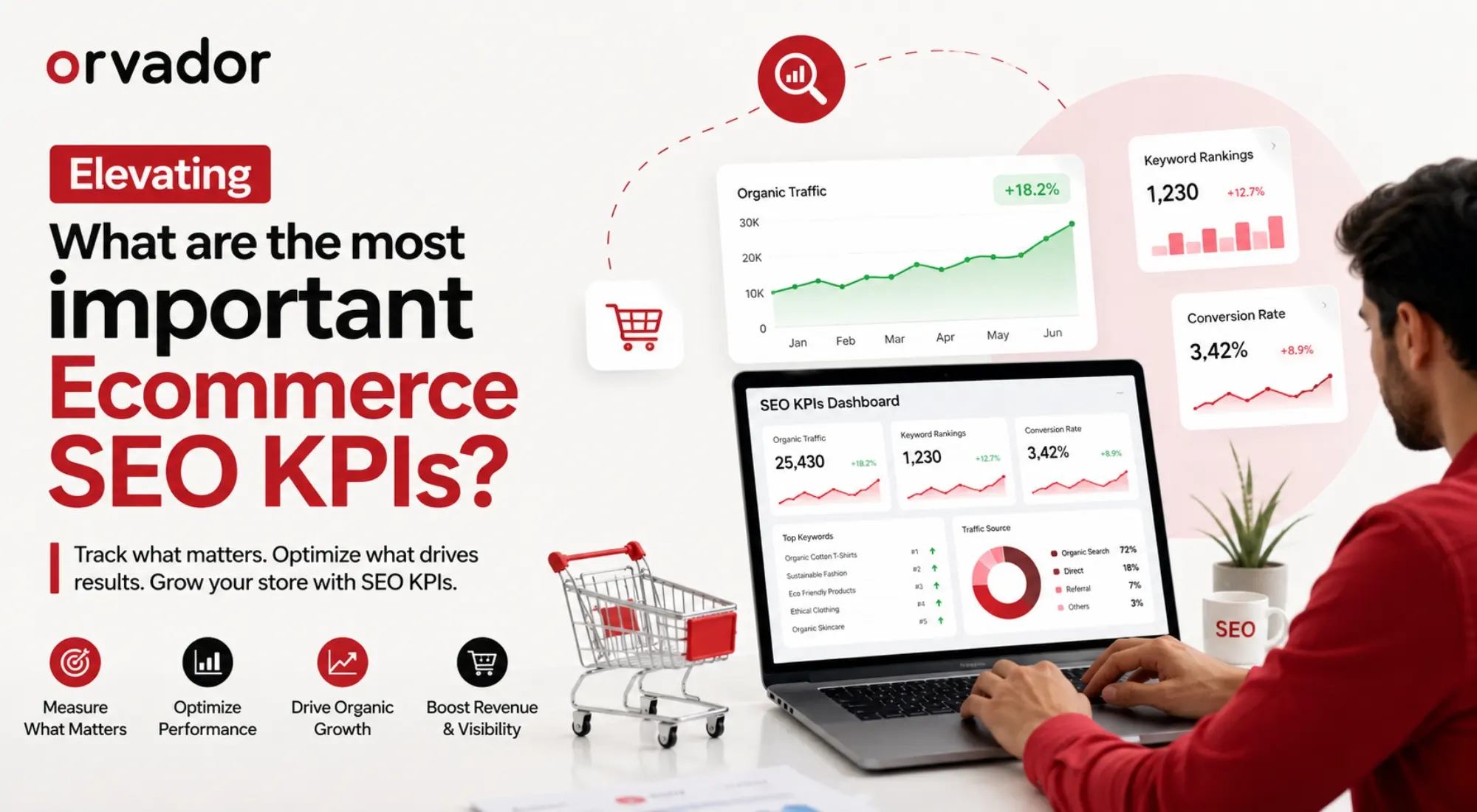
What are the most important Ecommerce SEO KPIs?

Understanding KPIs and their Significance – 


When you launch an ecommerce business, you invest so much more than just money – numerous ideas, countless hours, probably your life’s savings, and the trust of the people in your team. Now the time has passed and it is time to evaluate the actual results – for the people above you in your organization, for the client, and above all – for yourself!

How do you prove productivity? 

How do you show that you have added value to this project – in a measurable way? 

The answer lies in the Key Performance Indicators or the KPIs!

Key performance indicators, or KPIs, are the different aspects that measure the performance of a project or task. In case of eCommerce businesses, the KPIs allow the business owners, webpage developers, and marketing people to determine the profitability of a particular site. By understanding how successful the site is, further business plans can be made. In case of a not-so-desirable output, the team can work on the aspects that need to be improved in order to get the desired business results. 

One factor that needs to be taken into consideration is that the KPIs in the SEO or ecommerce industry may not necessarily be the same as the other business models. And hence, it is of paramount importance that an online business owner, SEO agency or webmaster understand the KPIs very clearly, and also the specific KPIs that need to be taken into account while assessing the profitability of the business.

What to presume before you evaluate – 

We have already established that an ecommerce business model will have a different set of KPIs than the other businesses. But another factor that needs to be considered is the nature of the business of the e-commerce entity. For instance, an ecommerce store dealing with a luxury clothing brand may have low number or orders but a very high Average Order value. However, the business like Grocery products etc. usually have high number of orders but low or average product price. 

The right set of ecommerce KPIs or Questions to ask business will depend on the following main factors – 

  • The business entity’s age
  • The line of business
  • The organizational goals

It is also necessary to choose realistic, measurable, and achievable KPIs. With specific KPIs set, and measurable results in hand, you can make decisions based on solid data rather than assuming things. KPIs can actually help a business rework on SEO components such as keyword ranking and strength, abandonment rate, average session duration, etc. 

Now the question of which KPIs to track is answered here…

We are here to help you shortlist the key Ecommerce KPIs. Let’s have a look at some of the top SEO KPIs that you need to track-

  • Organic Sessions

The traffic on your website is perhaps one of the most apparent key performance indicators, which a business owner will want to track. As a rule of thumb, the higher the traffic in organic search, the better the chances of conversion of these into actual sales. However, this may not always be true. And the numbers can exponentially increase with the increase in the number of people that visit your site. Apart from increasing the chances of converting organic visitors into actual purchasers, an increase in traffic also means more awareness of your brand, which, in turn, may lead to referral traffic. One needs to keep a track of this KPI, and look for noticeable highs and lows and the pattern in the increase or decrease.

  • Goals vs Conversions

Goals are the first step towards launching any business, whether it is a physical store or an ecommerce one. Unless we know where we want to go, we cannot plan how to reach there. Based on the goals, SEO strategies are formulated and budgets are allocated; and based on the achievements (in our case, conversions), strategies need to be revisited. Hence it is of great importance to understand where a business stands as compared to the goals determined. Google Analytics can be of great help here – by setting up goal tracking in Google Analytics, you can monitor the goals for your website and work on the marketing strategies based on the data in hand. Google Analytics is undoubtedly a blessing for those working in the SEO and digital marketing domains.

  • SEO ROI

SEO is a long-term process and it takes at least 4-6 months of investment on SEO, Content and Website before one start seeing results. So it is very important to understand the benefits associated with any investment that is done in a business. Consider this example – content marketing is one of the important components of SEO; it involves payment to the content writers, charges associated with press and media releases and in some cases, digital costs. Now, the ROI on this would be calculated based on the cost of the actual content. If you end up spending more than the cost of the content, then the ROI is bound to be very low. In such a situation, the strategies in place will have to be relooked at and then revised or reworked.

  • Competitor Rankings & Strategies

Many times, we are so involved with our own strategies and designs, that we often forget the other significant part of the business – the competitor! When in business, it is very important to keep an eye at the competitor – not only to understand what makes them better than us, but also to understand what we can do to be better than them.

Whether it is the product line, or the discounts offered or even something as simple as the appearance of the website – it is necessary to keep yourself at par or above, so that the ultimate aim of giving the customers a better user experience is fulfilled. Always remember, one satisfied customer may always help you in getting more referrals and conversions.

Few other important SEO KPIs are Landing Pages Performance, Impressions vs Clicks vs Page Position, Featured Snippets performance etc. Some of the most important Featured Snippets in Ecommerce business are:

  • Product Markup schema, the code that describes the basic information about the product
  • Website Business Schema like Organization, Local Business etc.
  • Category Schema markups like Breadcrumbs etc.
  • FAQ schema markup which will help users answer questions in the Google Search box directly.
  • Reviews Schema, which add more value to the search by providing more information
  • Price Schema, which helps people to make the purchase decision by comparing the price across various ecommerce sites.
  • Product Availability Schema, which will provide additional information to the buyer regarding the availability of the product.
  • Video Schema, another tool to provide more information regarding the usage or appearance of a product on the SERP. This, however, may not be applicable to all types of products.


  • Page Load Speeds

Customer’s time is of paramount importance, no one wants to sit and look at the screen while it takes its own sweet time to load the pages! The speed at which page loads could be a debatable KPI. According to Google, pagespeed of a webpage is extremely important, as it ultimately leads to a better experience for the user. Many SEO experts also advocate that the page load speed plays a crucial role in deciding the rankings and popularity among the customers. Moreover, Google’s upcoming Pagespeed and user experience-related update “Core Web Vitals” will be a major game-changer and create a far better experience in the future. Google AMP is another great example. 

Concluding thoughts…

As a business owner, it is necessary to understand your goals, create strategies, and execute them. While looking at the effectiveness of the strategies, it is necessary to understand that there are certain parameters that help you assess the profitability of your business. We at Orvador are constantly trying to help our clients assess whether their SEO strategies have worked in their favour or not. Feel free to let us know your thoughts on this.


The Core Web Vitals of SEO That Will Affect Your Ecommerce Store’s Google Ranking in 2021

What Are The Core Web Vitals Of SEO?

A lot of different factors influence how Google determines the rank of a website. One of these is page experience, which essentially evaluates the users’ experience on the page. 


SEO Core Web Vitals


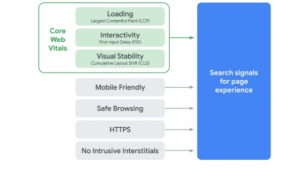
The existing search signals for page experience include mobile-friendliness, safe-browsing, HTTPS-security, and intrusive interstitial guidelines. These factors are called the Core Web Vitals of SEO. They each represent a unique, measurable aspect of the user experience of the page, judging how user-friendly it is. Furthermore, since the Core Web Vitals of SEO measure user experience, they are likely to change as user expectations evolve.

Breaking Down The 3 Core Web Vitals Of SEO


core web vitals infographic

Image Source: Google Developers

Google has derived three new signals from the Core Web Vitals of SEO for its May 2021 update. Largest Contentful Paint, First Input Delay, and Cumulative Layout Shift each measure loading speed, time to interactivity, and visual stability respectively. 

  1. Largest Contentful Paint (LCP) 

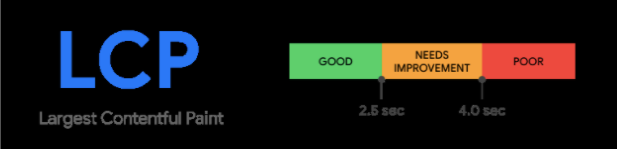
A “good” LCP score is achieved if the LCP occurs within the first 2.5 seconds of the page starting to load. 

LCP measures the time taken by a page’s main content to load. Since the Core Web Vitals of SEO are all user-focused, LCP measures how long it takes for the page to become readable from the user’s perspective. More technically, the LCP metric reports how long it takes for the largest image or text block visible within the viewport to become available to the user. If the LCP occurs between 2.5 and 4 seconds, it “needs improvement”, and if it takes longer than 4 seconds, it is designated as “poor”.

Largest Contentful Paint (LCP) Score

Image Source: web.dev

  1. First Input Delay (FID)

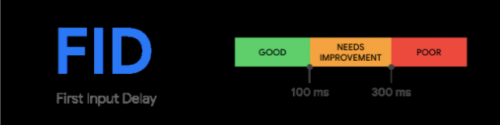
A “good” FID is less than 100 milliseconds.

FID measures the time taken by the page to become interactive and responsive to users. For example, it measures how long it would take for a user to perform an action like choosing an option from a menu or clicking a link. More technically, FID measures the time difference between when a user first performs an action on a page and when the browser begins processing event handlers to respond to that action. The FID “needs improvement” if it is between 100 and 300 milliseconds, and is considered “poor” if it is greater than 300 milliseconds.

First Input Delay

Image Source: wed.dev

  1. Cumulative Layout Shift (CLS)

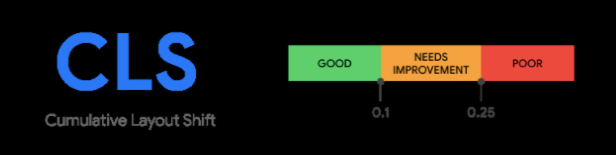
A “good” CLS score is less than 0.1. 

CLS measures the volume of unexpected layout shifts in the visual page content. This metric essentially measures how smooth the user experience is. If elements on your page remain fairly stable as the page loads and do not shuffle around a lot, your page is probably in a good place in terms of CLS. An expert explains, “CLS measures the total of all individual layout shift scores for every unexpected layout shift that occurs during the entire lifespan of the page. A layout shift occurs any time a visible element changes its position from one rendered frame to the next.” A CLS between 0.1 and 0.25 “needs improvement”, and a score above 0.25 is considered “poor”.

CLS Core Web Vitals

Image Source: web.dev

How Will The Core Web Vitals of SEO Affect Your Ecommerce Store’s Google Ranking in 2021?

Google will roll out an update in May 2021 that will make the users’ experience one of the ranking factors for any website. As per this Google update, user-friendly sites will rank higher than sites that aren’t user-friendly. This is in line with Google’s ambition to rank the sites that users love the most.  

Since the Core Web Vitals of SEO measures a user’s experience on your eCommerce store’s pages, it will be imperative for you to improve them. By improving your scores for each of these parameters, you can help users have a better experience on your site, encouraging them to return to it and use it more frequently.  Ignoring the Core Web Vitals would be one of the major Ecommerce SEO mistakes! 

Although the page experience metric is only one of many used to determine Google ranking, it’s certainly worth investing in if you want to improve the Google ranking of your site’s pages. Get in touch with us today if you want to improve the Google ranking of your eCommerce store in 2021!

Where Can I Find My Site’s Core Web Vitals of SEO Data?

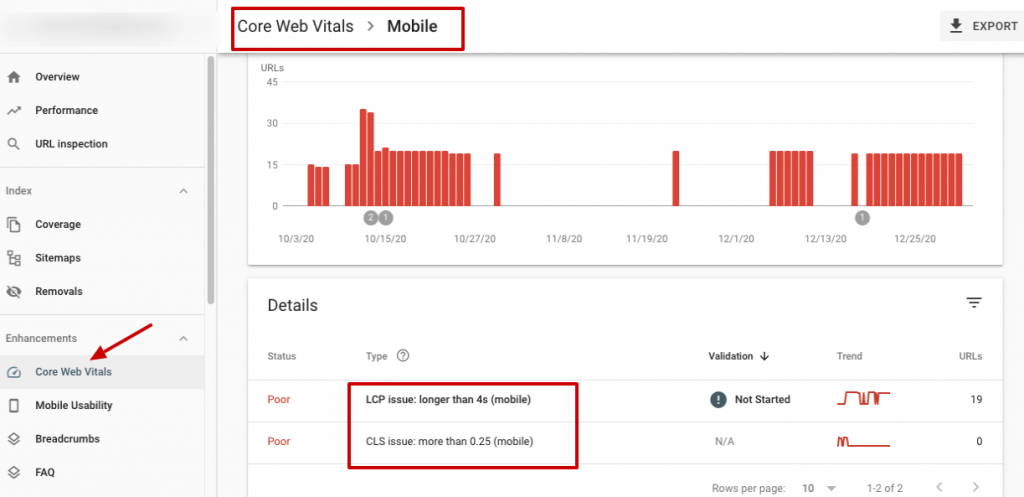
You can find your site’s Core Web Vitals of SEO data in the “enhancements” section of your Google Search Console account.


Search Console Enhancements Core Web Vitals Report


How Can I Improve My Site’s Core Web Vitals of SEO Score?

Once the Google updates roll out in May 2021, improving your site’s Core Web Vitals of SEO score will be essential to improve its Google ranking.  In anticipation of the update, developers can undertake several actions to improve each parameter’s score.

To improve your site’s LCP, you can:

For a page that’s composed of just content (like a blog post or news articles), FID isn’t very important, since the only “interactions” involve scrolling down the page or zooming in and out. However, for a page that is populated with actions that involve users needing to quickly click on and/or input something (like a login page), FID is extremely important. 

To improve your site’s FID, you can:

  • Minimize (or defer) JavaScript
  • Remove any non-critical third-party scripts
  • Use a browser cache

Finally, you can lower your site’s CLS score (reminder: a lower CLS score is better!) by:

  • Using set size attribute dimensions for any media
  • Ensuring ad elements have a reserved space
  • Adding new UI elements below the fold
Note: Consult with your Tech team before implementing above recommendations on Store. 

Although effective, these methods are certainly very technical. These SEO jargon and concepts are often challenging to understand for non-professionals in most circumstances, so if you would like some expert advice, or want to outsource SEO of your eCommerce store with respect to the Core Web Vitals, get in touch with Orvador today by getting Free SEO Audit of your website. 


5 Examples Of Sustainable eCommerce Brands


eCommerce Sustainability Is In Demand

There is an increase in demand for sustainable brands around the world. This demand is led by the millennials and Gen Z consumers who are said to have a “social-first” mindset. Several types of research have proved the youngster’s preference for eco-friendly and green products. Making up for a good percentage of overall consumers in the market with high spending power, eCommerce brands have no choice but to fulfill this demand to thrive in the future. 

Continue reading “5 Examples Of Sustainable eCommerce Brands”

Social Commerce – The Path to Progress Your Ecommerce Business

Social commerce or social e-commerce refers to using social media platforms for creating a tailored and targeted in-app shopping experience for users. In other words, social commerce enables the functionality of an ecommerce platform on social media platforms. When users are happy with your product offerings, your presence on social media enables them to spread positive word of mouth in the market, and can even make your brand go “viral”.

Continue reading “Social Commerce – The Path to Progress Your Ecommerce Business”

Questions to ask Ecommerce Client when onboarding

Congratulations on sourcing the new client!! It is definitely time to celebrate!

Now comes the process of client onboarding for an ecommerce company, and believe us there is no rocket science behind the process! Orvador has the expertise and experience in streamlining the entire process of client on-boarding, making the job easier for the ecommerce business. Always remember, the right beginning is the first step to a successful and long term relationship in the ecommerce industry, or as a matter of fact, in any industry.

Continue reading “Questions to ask Ecommerce Client when onboarding”

Sustainability – The Mantra For a Brighter Future

Sustainability is no longer just a conversation about recycling, plastic bags, or planting trees. It has become a much bigger question for individuals, businesses, and entire industries:

How can we grow today without creating a bigger problem for tomorrow?

This question is hard to avoid for all businesses, especially eCommerce brands. All types of decisions, including sourcing, logistics, power consumption, product innovation, and digital advertising, can have an impact on the environment and society.

At Orvador, we do not perceive sustainability only as an obligation of every corporation. We consider it to be a long-term strategy of running businesses that create value while considering people, society, and the environment.

And perhaps the biggest shift is this:

Sustainability is moving from a “nice-to-have” idea to a genuine business mindset.

What Does Sustainability Really Mean?

In simple terms, sustainability means meeting today’s needs without compromising the ability of future generations to meet theirs.

But in business, the idea goes further.

A sustainable business considers the environmental, social, and economic consequences of its decisions. It asks questions such as:

  • Can we reduce unnecessary waste?
  • Can we use resources more efficiently?
  • Are our employees and suppliers treated fairly?
  • Can our products and packaging have a lower environmental impact?
  • Can we remain financially successful while operating responsibly?

This is why sustainability should not be treated as a single campaign or marketing message. It is an approach that can influence the entire way a business operates.

For brands that want to understand how Orvador works with purpose-driven businesses, you can also explore our approach to sustainable eCommerce brands, where sustainability and digital growth come together.

Sustainability Starts With Everyday Choices

Sustainable living does not always require dramatic changes.

Choosing reusable products instead of disposable plastic, reducing food waste, conserving electricity, buying responsibly sourced products, and making more thoughtful purchasing decisions are all small steps that contribute to a larger change.

The huge difference occurs when lots of people keep doing these things.

Another thing that has changed is buyer expectations. These days, consumers have many chances to learn more about products, check prices, read reviews of products, and find out how businesses operate.

That creates an important opportunity for businesses:

Make responsible practices part of the actual business—not just part of the marketing message.

The Three Pillars of Sustainability

Pillars of Sustainability

A sustainable business cannot focus only on the environment. Long-term sustainability rests on three interconnected pillars.

1. Environmental Sustainability – Planet

The environmental pillar focuses on reducing the pressure businesses place on natural resources and ecosystems.

For an eCommerce company, this could mean:

  • Reducing unnecessary packaging
  • Choosing recyclable or reusable materials
  • Improving delivery efficiency
  • Reducing product and packaging waste
  • Using resources more efficiently
  • Working with responsible suppliers
  • Considering renewable energy where practical

The objective is not to become perfect overnight.

It is to identify avoidable environmental impact and continuously work to reduce it.

2. Social Sustainability – People

A sustainable business also has a responsibility toward people.

Employees, suppliers, customers, local communities, and other stakeholders are all part of the larger business ecosystem.

Social sustainability can include fair working conditions, responsible sourcing, inclusive opportunities, employee well-being, community development, and ethical relationships throughout the supply chain.

A business cannot genuinely call itself sustainable while ignoring the people who make its operations possible.

3. Economic Sustainability – Profit

Sustainability also has an economic side.

A business needs healthy revenue, responsible financial management, good governance, and long-term planning to survive and create continued value.

Profit and sustainability are not necessarily opposites. In many cases, responsible practices can help businesses reduce waste, improve efficiency, strengthen customer trust, and build resilience.

The real challenge is finding a balance where profit does not come at the expense of people or the planet.

Why Sustainability Matters More Than Ever

The way people consume has changed dramatically.

Consumers now have access to more brands, more information, and more choices than ever before. They can compare products, research companies, read reviews, and investigate a brand’s claims before making a purchase.

This has made transparency increasingly important.

A brand that talks about sustainability but provides little evidence can quickly lose credibility. On the other hand, businesses that clearly explain what they are doing, why they are doing it, and where they still need to improve can build stronger relationships with their audiences.

That is why authentic sustainability matters more than sustainability slogans.

Orvador has also explored this growing demand through its article on sustainable eCommerce brands, which looks at examples of businesses incorporating sustainability into their eCommerce models.

Sustainable eCommerce: Where Growth Meets Responsibility

The rapid growth of eCommerce has created enormous convenience for consumers, but it has also raised important questions about packaging, returns, transportation, warehousing, product waste, and supply chains.

This is where sustainable eCommerce comes into the picture.

A sustainable eCommerce business looks beyond simply selling products online. It considers the environmental and social impact of the complete customer journey—from sourcing and production to packaging, delivery, returns, and disposal.

The goal is not to stop growth.

It is to make growth more responsible.

What Can a Sustainable eCommerce Business Do?

There is no single formula, but businesses can start by examining areas such as:

Eco-friendly packaging:
Reduce unnecessary materials and explore recyclable, reusable, or responsibly sourced alternatives.

Smarter logistics:
Improve inventory planning and delivery efficiency to reduce unnecessary transportation and avoidable shipments.

Responsible sourcing:
Work with suppliers that follow credible environmental and social standards.

Longer-lasting products:
Products designed for durability can help reduce unnecessary replacement and waste.

Better product information:
Clear descriptions, sizing information, material details, and customer guidance can help reduce avoidable returns.

Responsible marketing:
Communicate genuine sustainability efforts without exaggerating environmental benefits.

Businesses also need a strong digital foundation to support these efforts. Effective eCommerce growth is not simply about driving more visitors; it is also about making the website easier to understand, navigate, and convert. Our guide to eCommerce growth marketing explores practical ways businesses can improve their online growth strategy.

Sustainable Marketing Is Part of the Bigger Picture

Sustainability should not stop at operations.

The way a business communicates with customers also matters.

Sustainable marketing means promoting a brand’s values honestly and showing customers the real work behind its claims. Instead of simply saying “eco-friendly,” brands can explain what makes a product or process more responsible.

For example:

  • What materials are being used?
  • Where are they sourced?
  • How has packaging changed?
  • What waste-reduction steps have been introduced?
  • What social initiatives does the business support?
  • What measurable progress has been made?

This approach makes sustainability more credible—and more useful to consumers.

For sustainable brands, SEO and digital marketing can do more than generate traffic. They can educate audiences, communicate impact, build trust, and connect people with products and organizations that genuinely align with their values.

Building Visibility for Sustainable Brands

A great sustainability initiative has limited impact if the people who care about it cannot find the business online.

This is where organic search and digital visibility become important.

Sustainable businesses need content that answers real customer questions, useful website structures, clear product information, and digital experiences that make it easy for users to understand the brand.

Search visibility should therefore support the larger business purpose rather than operate separately from it.

And search itself is changing.

People are increasingly using AI-powered platforms to ask questions, compare businesses, research products, and discover recommendations. Orvador’s Generative Engine Optimization (GEO) services focus on helping brands improve their visibility across AI-driven search experiences as well as traditional search.

For sustainable brands, this creates another opportunity: make the brand’s expertise, values, evidence, and authority easy for both people and search systems to understand.

Sustainability Is Not the Same as Greenwashing

One of the biggest challenges facing sustainable brands is greenwashing.

Greenwashing happens when a company creates an exaggerated or misleading impression about the environmental benefits of its products, services, or operations.

Simply using words such as “green,” “natural,” “clean,” or “eco-friendly” does not automatically make a business sustainable.

Consumers are becoming more careful about these claims.

A better approach is to replace vague statements with specific information.

Instead of:

“Our packaging is completely green.”

A stronger message would explain:

“We reduced unnecessary packaging and switched selected shipments to recyclable materials.”

The second statement gives customers something concrete to understand.

Real sustainability is demonstrated through actions, not adjectives.

How Businesses Can Build a More Sustainable Future

Sustainable Future

Businesses do not need to transform everything at once.

A practical approach is to start by identifying the areas with the greatest environmental or social impact.

Step 1: Understand Your Current Impact

Look at packaging, energy, transportation, sourcing, waste, returns, and production.

Step 2: Set Realistic Goals

Choose measurable objectives instead of broad statements such as “become more sustainable.”

Step 3: Work With Responsible Partners

Your sustainability efforts are influenced by suppliers, logistics providers, manufacturers, and other partners.

Step 4: Reduce Waste Before Adding New Initiatives

Sometimes the most sustainable improvement is simply removing something unnecessary.

Step 5: Communicate Progress Honestly

Share achievements, challenges, and improvements without making claims that cannot be supported.

Step 6: Keep Improving

Sustainability is not a campaign with a fixed end date. It is an ongoing process.

Sustainable eCommerce and the Importance of Better Content

Content plays an important role in sustainable eCommerce because customers often need more information before making a responsible purchase.

They may want to know:

  • Where was the product made?
  • What materials were used?
  • Is the packaging recyclable?
  • How should the product be cared for?
  • What makes the product more sustainable?
  • How does the brand source its materials?

This makes useful, original content an important part of both customer experience and search visibility.

For eCommerce websites, content quality also needs to be supported by a technically sound site structure. Issues such as duplicated product descriptions, multiple product URLs, category filters, and similar product pages can make organic visibility harder to manage. Orvador’s guide on fixing eCommerce content duplication issues covers these challenges in greater detail.

The lesson is simple:

Sustainable growth needs useful content—not just more content.

Sustainability and Digital Growth Can Work Together

There is a common misconception that sustainability and business growth sit on opposite sides of the table.

They do not have to.

A sustainable business still needs customers. It still needs visibility. It still needs a strong website, useful content, effective SEO, and a clear digital strategy.

The difference is in the purpose behind that growth.

For a purpose-driven or sustainable brand, digital marketing can do more than generate traffic. It can educate audiences, communicate impact, build trust, and connect people with products and organizations that align with their values.

That is where sustainable digital marketing becomes meaningful.

At Orvador, our approach is built around helping sustainable brands and mission-driven organizations improve their digital visibility while keeping their larger purpose at the center of their strategy.

Sustainability for Mission-Driven Organizations

Sustainability is not limited to commercial businesses.

NGOs and nonprofit organizations working across environmental protection, education, climate action, community development, and social impact also need strong digital visibility to reach the people who can support their mission.

For these organizations, search visibility can help attract donors, volunteers, supporters, partners, and people searching for information about a specific cause.

Orvador’s SEO services for nonprofits focus on improving organic visibility while connecting SEO strategy with the organization’s broader mission and goals.

This is an important part of sustainable digital growth:

The goal is not simply to attract more visitors. It is to attract the right people and turn visibility into meaningful action.

The Future of Sustainable eCommerce

The future of eCommerce will not be defined only by faster delivery or more products.

It will increasingly be shaped by how responsibly businesses grow.

Sustainable packaging, ethical sourcing, responsible product development, efficient supply chains, lower-waste operations, and transparent communication can become competitive advantages when they are genuinely built into a company’s model.

India is also seeing growing interest in businesses working across areas such as organic products, renewable energy, waste management, sustainable fashion, and responsible consumption.

These businesses show that sustainability can create opportunities for innovation rather than simply adding restrictions to growth.

For startups and established companies alike, the opportunity is to think differently:

Can growth itself become more responsible?

A Better Future Starts With Better Business Decisions

Sustainability is not about being perfect.

It is about being intentional.

Every package eliminated, resource conserved, responsible supplier selected, efficient process introduced, and honest sustainability story shared can contribute to a larger shift.

The businesses that understand this early will have an opportunity to build more resilient brands and stronger relationships with increasingly conscious audiences.

The future belongs not simply to businesses that grow fast, but to businesses that understand how to grow responsibly.

At Orvador, we believe sustainable brands deserve sustainable digital growth. Through thoughtful SEO, digital marketing, content strategy, and emerging search approaches such as GEO, businesses can build visibility without losing sight of the purpose that makes their work matter.

A brighter future is not created by one company or one campaign. It is created when better choices become the way we do business.

Final Thought

Sustainability is no longer simply about what businesses produce.

It is about how they operate, how they grow, how they communicate, and what kind of future they help create.

For businesses that genuinely care about their environmental and social impact, sustainability can become more than a responsibility—it can become part of their competitive advantage, brand identity, and long-term growth strategy.

The opportunity is not to choose between growth and sustainability.

It is to build a model where responsible growth becomes the goal.
5 Steps To Optimize Ecommerce Voice Search

What Is Google Voice Search?

Google Voice Search is a function that allows users to search on Google by ‘speaking’ instead of ‘typing’.

It can be used both on desktop and mobile where the user has to open the browser, tap on the microphone icon on the right-hand side of the search box and ‘speak’ what they are searching for. Google’s smart AI catches the phrase and then gives relevant results based on the user’s query.

Continue reading “5 Steps To Optimize Ecommerce Voice Search”

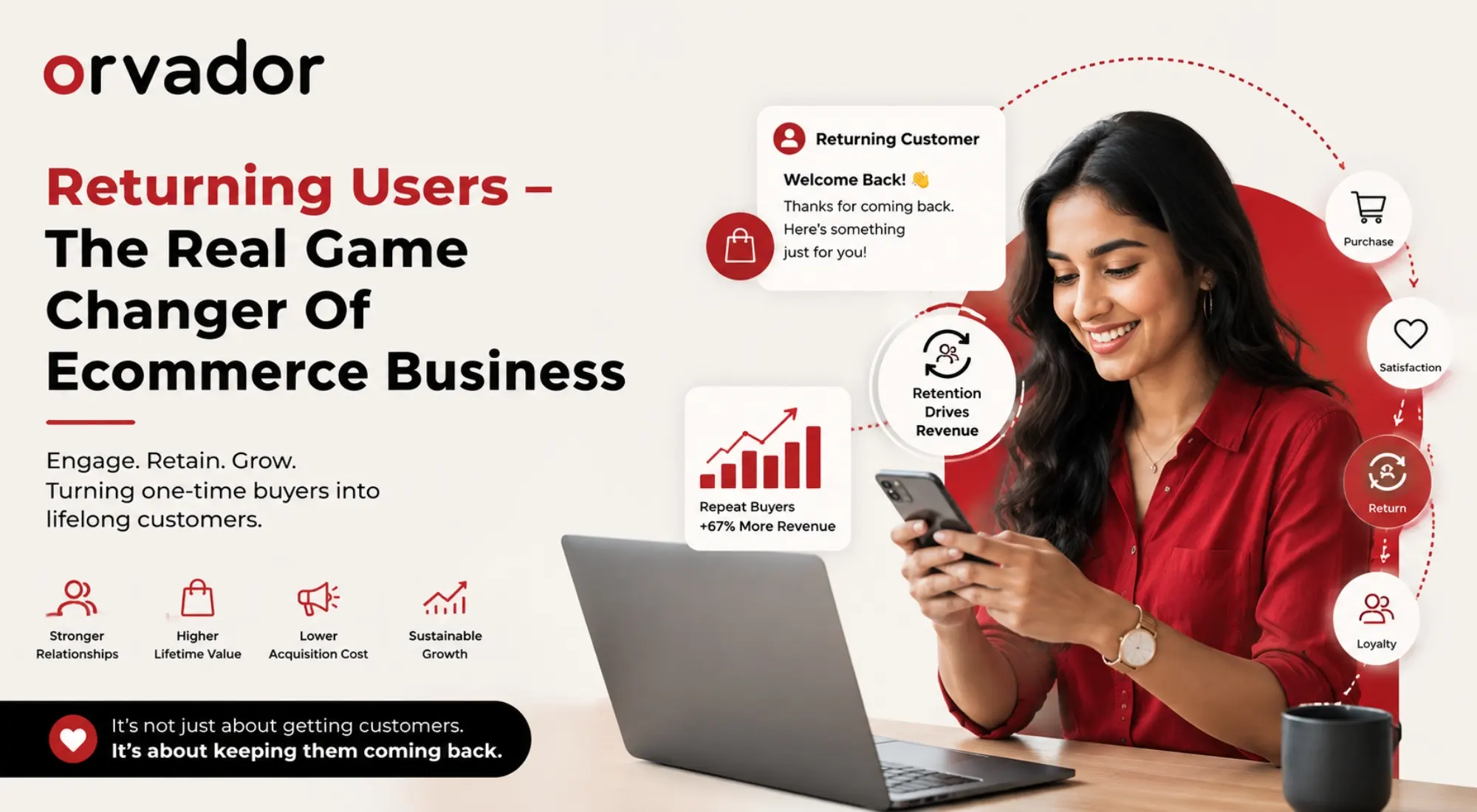
Returning Users – The Real Game Changer Of Ecommerce Business

 When we talk about the “traffic” in a particular website, it can be categorised into – 

  • New users – those who are visiting the website for the first time.
  • Returning users – those who have already visited the website once or more, within a fixed timeframe. It is imperative that the user has opened another session in the same web browser on the same device.

Continue reading “Returning Users – The Real Game Changer Of Ecommerce Business”

How to Fix eCommerce Content Duplication Issues?


What is Duplicate Content in SEO?

Duplicate content is content that appears at more than one web address. It is basically a piece of content that is available on the internet in more than one place. Also called “thin content”, “duplicate content”, or “low-quality content” by some, content duplication is a serious issue when it comes to SEO.

Continue reading “How to Fix eCommerce Content Duplication Issues?”