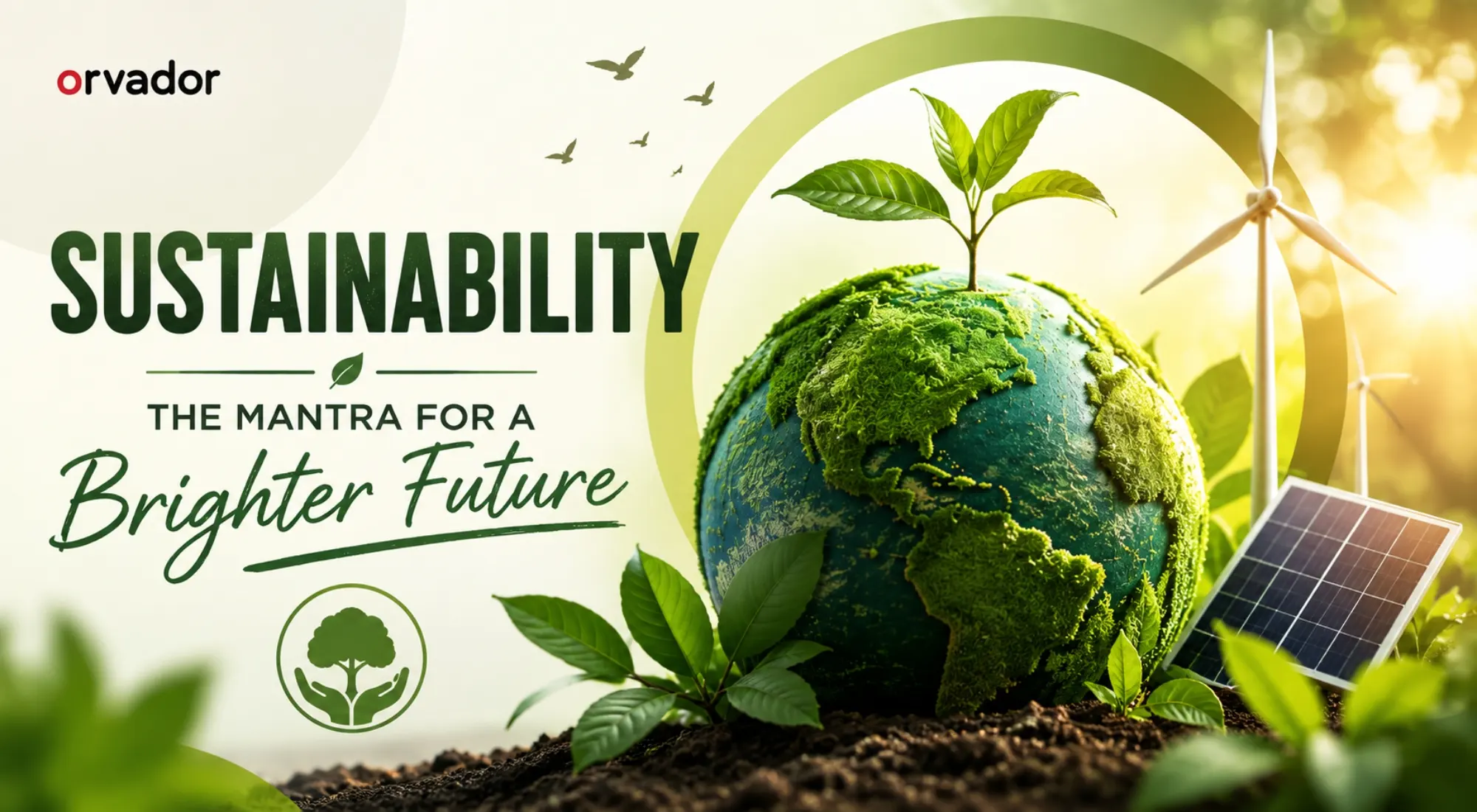
Sustainability is no longer just a conversation about recycling, plastic bags, or planting trees. It has become a much bigger question for individuals, businesses, and entire industries:
How can we grow today without creating a bigger problem for tomorrow?
This question is hard to avoid for all businesses, especially eCommerce brands. All types of decisions, including sourcing, logistics, power consumption, product innovation, and digital advertising, can have an impact on the environment and society.
At Orvador, we do not perceive sustainability only as an obligation of every corporation. We consider it to be a long-term strategy of running businesses that create value while considering people, society, and the environment.
And perhaps the biggest shift is this:
Sustainability is moving from a “nice-to-have” idea to a genuine business mindset.
What Does Sustainability Really Mean?
In simple terms, sustainability means meeting today’s needs without compromising the ability of future generations to meet theirs.
But in business, the idea goes further.
A sustainable business considers the environmental, social, and economic consequences of its decisions. It asks questions such as:
- Can we reduce unnecessary waste?
- Can we use resources more efficiently?
- Are our employees and suppliers treated fairly?
- Can our products and packaging have a lower environmental impact?
- Can we remain financially successful while operating responsibly?
This is why sustainability should not be treated as a single campaign or marketing message. It is an approach that can influence the entire way a business operates.
For brands that want to understand how Orvador works with purpose-driven businesses, you can also explore our approach to sustainable eCommerce brands, where sustainability and digital growth come together.
Sustainability Starts With Everyday Choices
Sustainable living does not always require dramatic changes.
Choosing reusable products instead of disposable plastic, reducing food waste, conserving electricity, buying responsibly sourced products, and making more thoughtful purchasing decisions are all small steps that contribute to a larger change.
The huge difference occurs when lots of people keep doing these things.
Another thing that has changed is buyer expectations. These days, consumers have many chances to learn more about products, check prices, read reviews of products, and find out how businesses operate.
That creates an important opportunity for businesses:
Make responsible practices part of the actual business—not just part of the marketing message.
The Three Pillars of Sustainability
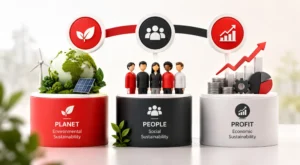
A sustainable business cannot focus only on the environment. Long-term sustainability rests on three interconnected pillars.
1. Environmental Sustainability – Planet
The environmental pillar focuses on reducing the pressure businesses place on natural resources and ecosystems.
For an eCommerce company, this could mean:
- Reducing unnecessary packaging
- Choosing recyclable or reusable materials
- Improving delivery efficiency
- Reducing product and packaging waste
- Using resources more efficiently
- Working with responsible suppliers
- Considering renewable energy where practical
The objective is not to become perfect overnight.
It is to identify avoidable environmental impact and continuously work to reduce it.
2. Social Sustainability – People
A sustainable business also has a responsibility toward people.
Employees, suppliers, customers, local communities, and other stakeholders are all part of the larger business ecosystem.
Social sustainability can include fair working conditions, responsible sourcing, inclusive opportunities, employee well-being, community development, and ethical relationships throughout the supply chain.
A business cannot genuinely call itself sustainable while ignoring the people who make its operations possible.
3. Economic Sustainability – Profit
Sustainability also has an economic side.
A business needs healthy revenue, responsible financial management, good governance, and long-term planning to survive and create continued value.
Profit and sustainability are not necessarily opposites. In many cases, responsible practices can help businesses reduce waste, improve efficiency, strengthen customer trust, and build resilience.
The real challenge is finding a balance where profit does not come at the expense of people or the planet.
Why Sustainability Matters More Than Ever
The way people consume has changed dramatically.
Consumers now have access to more brands, more information, and more choices than ever before. They can compare products, research companies, read reviews, and investigate a brand’s claims before making a purchase.
This has made transparency increasingly important.
A brand that talks about sustainability but provides little evidence can quickly lose credibility. On the other hand, businesses that clearly explain what they are doing, why they are doing it, and where they still need to improve can build stronger relationships with their audiences.
That is why authentic sustainability matters more than sustainability slogans.
Orvador has also explored this growing demand through its article on sustainable eCommerce brands, which looks at examples of businesses incorporating sustainability into their eCommerce models.
Sustainable eCommerce: Where Growth Meets Responsibility
The rapid growth of eCommerce has created enormous convenience for consumers, but it has also raised important questions about packaging, returns, transportation, warehousing, product waste, and supply chains.
This is where sustainable eCommerce comes into the picture.
A sustainable eCommerce business looks beyond simply selling products online. It considers the environmental and social impact of the complete customer journey—from sourcing and production to packaging, delivery, returns, and disposal.
The goal is not to stop growth.
It is to make growth more responsible.
What Can a Sustainable eCommerce Business Do?
There is no single formula, but businesses can start by examining areas such as:
Eco-friendly packaging:
Reduce unnecessary materials and explore recyclable, reusable, or responsibly sourced alternatives.
Smarter logistics:
Improve inventory planning and delivery efficiency to reduce unnecessary transportation and avoidable shipments.
Responsible sourcing:
Work with suppliers that follow credible environmental and social standards.
Longer-lasting products:
Products designed for durability can help reduce unnecessary replacement and waste.
Better product information:
Clear descriptions, sizing information, material details, and customer guidance can help reduce avoidable returns.
Responsible marketing:
Communicate genuine sustainability efforts without exaggerating environmental benefits.
Businesses also need a strong digital foundation to support these efforts. Effective eCommerce growth is not simply about driving more visitors; it is also about making the website easier to understand, navigate, and convert. Our guide to eCommerce growth marketing explores practical ways businesses can improve their online growth strategy.
Sustainable Marketing Is Part of the Bigger Picture
Sustainability should not stop at operations.
The way a business communicates with customers also matters.
Sustainable marketing means promoting a brand’s values honestly and showing customers the real work behind its claims. Instead of simply saying “eco-friendly,” brands can explain what makes a product or process more responsible.
For example:
- What materials are being used?
- Where are they sourced?
- How has packaging changed?
- What waste-reduction steps have been introduced?
- What social initiatives does the business support?
- What measurable progress has been made?
This approach makes sustainability more credible—and more useful to consumers.
For sustainable brands, SEO and digital marketing can do more than generate traffic. They can educate audiences, communicate impact, build trust, and connect people with products and organizations that genuinely align with their values.
Building Visibility for Sustainable Brands
A great sustainability initiative has limited impact if the people who care about it cannot find the business online.
This is where organic search and digital visibility become important.
Sustainable businesses need content that answers real customer questions, useful website structures, clear product information, and digital experiences that make it easy for users to understand the brand.
Search visibility should therefore support the larger business purpose rather than operate separately from it.
And search itself is changing.
People are increasingly using AI-powered platforms to ask questions, compare businesses, research products, and discover recommendations. Orvador’s Generative Engine Optimization (GEO) services focus on helping brands improve their visibility across AI-driven search experiences as well as traditional search.
For sustainable brands, this creates another opportunity: make the brand’s expertise, values, evidence, and authority easy for both people and search systems to understand.
Sustainability Is Not the Same as Greenwashing
One of the biggest challenges facing sustainable brands is greenwashing.
Greenwashing happens when a company creates an exaggerated or misleading impression about the environmental benefits of its products, services, or operations.
Simply using words such as “green,” “natural,” “clean,” or “eco-friendly” does not automatically make a business sustainable.
Consumers are becoming more careful about these claims.
A better approach is to replace vague statements with specific information.
Instead of:
“Our packaging is completely green.”
A stronger message would explain:
“We reduced unnecessary packaging and switched selected shipments to recyclable materials.”
The second statement gives customers something concrete to understand.
Real sustainability is demonstrated through actions, not adjectives.
How Businesses Can Build a More Sustainable Future
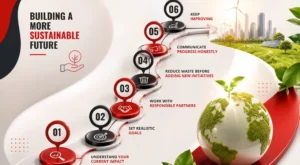
Businesses do not need to transform everything at once.
A practical approach is to start by identifying the areas with the greatest environmental or social impact.
Step 1: Understand Your Current Impact
Look at packaging, energy, transportation, sourcing, waste, returns, and production.
Step 2: Set Realistic Goals
Choose measurable objectives instead of broad statements such as “become more sustainable.”
Step 3: Work With Responsible Partners
Your sustainability efforts are influenced by suppliers, logistics providers, manufacturers, and other partners.
Step 4: Reduce Waste Before Adding New Initiatives
Sometimes the most sustainable improvement is simply removing something unnecessary.
Step 5: Communicate Progress Honestly
Share achievements, challenges, and improvements without making claims that cannot be supported.
Step 6: Keep Improving
Sustainability is not a campaign with a fixed end date. It is an ongoing process.
Sustainable eCommerce and the Importance of Better Content
Content plays an important role in sustainable eCommerce because customers often need more information before making a responsible purchase.
They may want to know:
- Where was the product made?
- What materials were used?
- Is the packaging recyclable?
- How should the product be cared for?
- What makes the product more sustainable?
- How does the brand source its materials?
This makes useful, original content an important part of both customer experience and search visibility.
For eCommerce websites, content quality also needs to be supported by a technically sound site structure. Issues such as duplicated product descriptions, multiple product URLs, category filters, and similar product pages can make organic visibility harder to manage. Orvador’s guide on fixing eCommerce content duplication issues covers these challenges in greater detail.
The lesson is simple:
Sustainable growth needs useful content—not just more content.
Sustainability and Digital Growth Can Work Together
There is a common misconception that sustainability and business growth sit on opposite sides of the table.
They do not have to.
A sustainable business still needs customers. It still needs visibility. It still needs a strong website, useful content, effective SEO, and a clear digital strategy.
The difference is in the purpose behind that growth.
For a purpose-driven or sustainable brand, digital marketing can do more than generate traffic. It can educate audiences, communicate impact, build trust, and connect people with products and organizations that align with their values.
That is where sustainable digital marketing becomes meaningful.
At Orvador, our approach is built around helping sustainable brands and mission-driven organizations improve their digital visibility while keeping their larger purpose at the center of their strategy.
Sustainability for Mission-Driven Organizations
Sustainability is not limited to commercial businesses.
NGOs and nonprofit organizations working across environmental protection, education, climate action, community development, and social impact also need strong digital visibility to reach the people who can support their mission.
For these organizations, search visibility can help attract donors, volunteers, supporters, partners, and people searching for information about a specific cause.
Orvador’s SEO services for nonprofits focus on improving organic visibility while connecting SEO strategy with the organization’s broader mission and goals.
This is an important part of sustainable digital growth:
The goal is not simply to attract more visitors. It is to attract the right people and turn visibility into meaningful action.
The Future of Sustainable eCommerce
The future of eCommerce will not be defined only by faster delivery or more products.
It will increasingly be shaped by how responsibly businesses grow.
Sustainable packaging, ethical sourcing, responsible product development, efficient supply chains, lower-waste operations, and transparent communication can become competitive advantages when they are genuinely built into a company’s model.
India is also seeing growing interest in businesses working across areas such as organic products, renewable energy, waste management, sustainable fashion, and responsible consumption.
These businesses show that sustainability can create opportunities for innovation rather than simply adding restrictions to growth.
For startups and established companies alike, the opportunity is to think differently:
Can growth itself become more responsible?
A Better Future Starts With Better Business Decisions
Sustainability is not about being perfect.
It is about being intentional.
Every package eliminated, resource conserved, responsible supplier selected, efficient process introduced, and honest sustainability story shared can contribute to a larger shift.
The businesses that understand this early will have an opportunity to build more resilient brands and stronger relationships with increasingly conscious audiences.
The future belongs not simply to businesses that grow fast, but to businesses that understand how to grow responsibly.
At Orvador, we believe sustainable brands deserve sustainable digital growth. Through thoughtful SEO, digital marketing, content strategy, and emerging search approaches such as GEO, businesses can build visibility without losing sight of the purpose that makes their work matter.
A brighter future is not created by one company or one campaign. It is created when better choices become the way we do business.
Final Thought
Sustainability is no longer simply about what businesses produce.
It is about how they operate, how they grow, how they communicate, and what kind of future they help create.
For businesses that genuinely care about their environmental and social impact, sustainability can become more than a responsibility—it can become part of their competitive advantage, brand identity, and long-term growth strategy.
The opportunity is not to choose between growth and sustainability.
It is to build a model where responsible growth becomes the goal.